"A mind that is in harmony is like a clear pool of water" - Buddha
What is
Tai Chi?

Tai Chi Chuan or Taiji Quan, is an ancient Chinese "internal" martial art.........
It's slow, flowing, and mindful movements are combined with breathing techniques to cultivate energy, known as "Qi" or "Chi".
Often referred to as "meditation in motion", it is practiced for both self-defence and for its significant health benefits which include improved balance, flexibility, and stress reduction.
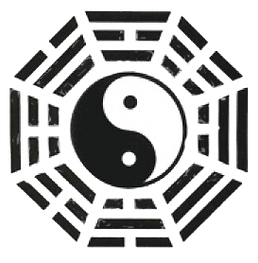
Taiji Quan can be translated as "supreme ultimate fist," it integrates martial arts with Chinese cosmology and the principles of Yin and Yang. It places emphasis on deep relaxation, correct posture, and circular movements.

While the precise origins of Tai Chi are not known, there are a variety of colourful legends about its creation that in turn adds to the mysticism surrounding this beautiful system.
One Legend attributes Tai Chi to Zhang Sanfeng, a 13th-14th century Taoist monk who supposedly created the art after witnessing a fight between a snake and a crane.
The earliest well-documented practice began during the Ming-Qing transition at Chen Village and Zhabao Village in Henan on the North China Plain. This was a region where centuries of rebellions, invasions, and adverse economic and social conditions nurtured the development of a wide range of martial arts, including those of the Shaolin Monastery on Mount Song.


Most modern styles trace their development to five traditional schools: Chen, Yang, Wu (Hao), Wu, and Sun. In the early 20th century Yang Chengfu, Wu Jianquan, Sun Lutang, and others promoted and standardized the art for its health benefits in programs supported by the Nationalist government, an approach that was further expanded and institutionalized by the Chinese government after 1949.
Within Tai Chi can be found the Taoist concepts of 'softness overcoming hardness' and of Wu Wei - effortless action, as well as the Taoist essence of spiritual self-cultivation.

In 2020, Tai Chi was included in the UNESCO List of Intangible Cultural Heritage of Humanity.
